Author: Saaka Editor

  • Our 1st Wild Welfare UK Husbandry Workshop

    Our 1st Wild Welfare UK Husbandry Workshop

    Sarah Bonser-Blake and Simon Marsh from Wild Welfare UK arrived in the rain, and with Ryne Ferguson and his team created an unforgettable experience.

    By Robynn Moller

    In 2025 Dave Morgan though Wild Wildlife offered to sponsor the flights of the Director and the Animal Welfare Field Manager of Wild Welfare to South Africa to perform a workshop. SAAKA is are proud to announce that it occurred and that it was a hit! As a Partner with Wild Welfare SAAKA are committed to offering more workshops and experiences to their members.
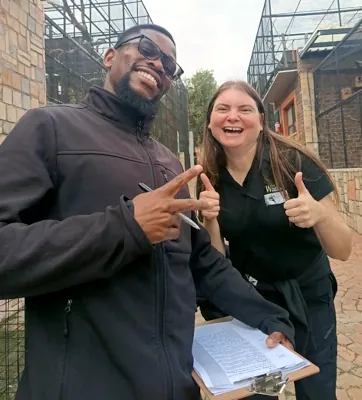
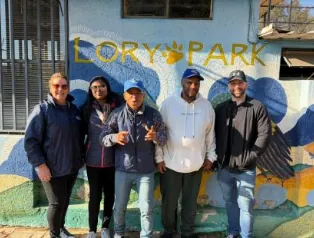
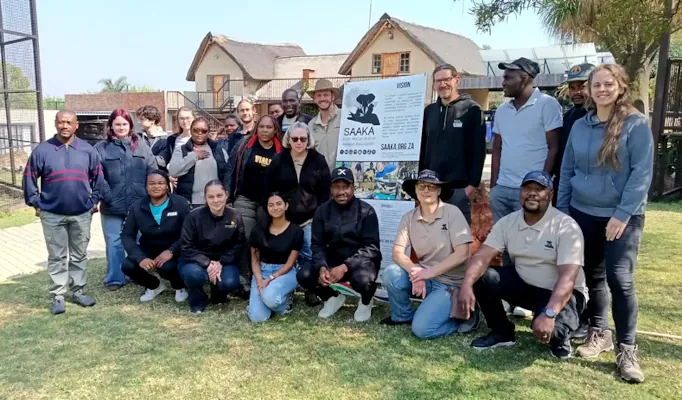
    As such, between 7th and the 10th September 2026, amazing people arrived in the rain into the lives of 37 South African delegates at Lory Park Zoo. Sarah Bonser-Blake and Simon Marsh from Wild Welfare UK, joined Ryne Ferguson and his team to create an unforgettable experience.

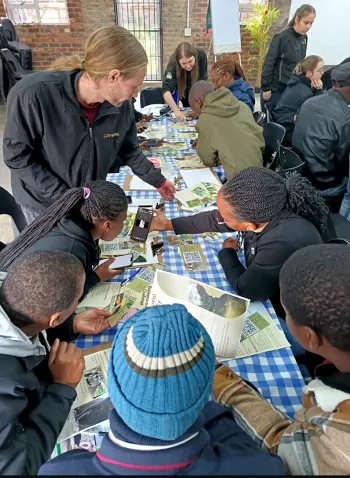
    The four days were a whirlwind of information overload and inspiration. Day One was focused on welfare concepts and throughout the few days those concepts were driven into record keeping, nutrition, behaviour, exhibit design and management and of course enrichment.
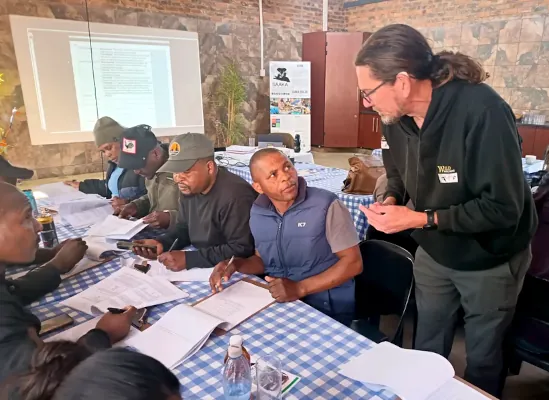
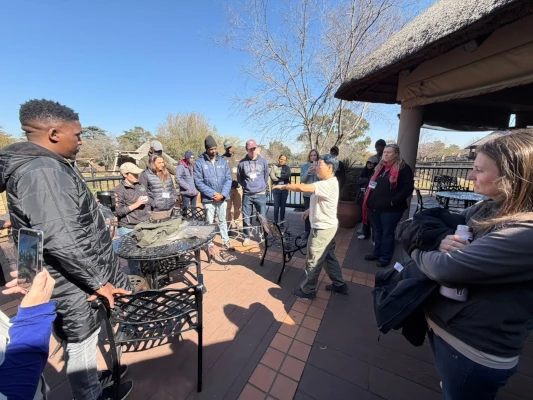
    Simon with delegates discussing welfare

    Simon and Sarah provided a practical and lively presentations based on the online welfare course https://wildwelfare.org/resources-elearn-programme/ which is a must for anyone working with animals in a captive setting. This course was broken down, and with a few practicals made relevant to the delegates that attended.
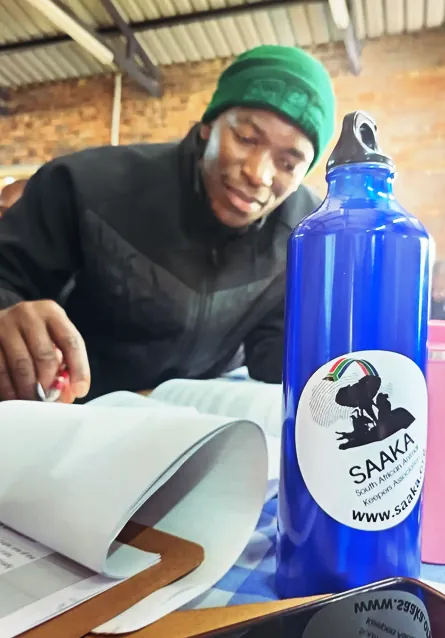
    Delegates learnt how to assess behaviour at the rainbow lorikeets, how to do body scoring at the ring tailed lemurs. They did a mini activity and learnt how to evaluate enrichment at the lions and spotted eagle owls. To finally on the final day doing a practical full welfare assessment for the green iguana, palm nut vulture, caracal and crested gibbons.

    In summary, it is important for SAAKA to create opportunities for professional animal care givers to network and have access to new knowledge. As part of SAAKA’s core mandate the four days did exactly that.

    The workshop had people from various areas of the industry and community converge. From volunteers to nutritionist this workshop was a hit. Johannesburg Zoo, Hoedspruit Reptile Centre, National Zoo (City and Mokopane), Cango Wildlife Ranch, Kruger National Park (Boma staff), Anderson Wildlife, Monte Casino Bird Gardens, Lory Park Zoo to even a few Conservation Students. Of the 37 delegates, 17 were SAAKA Members, 5 being Committee Members.

    The evenings were had around the bonfire or playing games in the lapa with dinners that varied from home made pizza to mushroom burgers. All round a good time with Sarah, Simon and Ryne telling stories and making us all laugh out loud.

    Thank you goes to;

    • Traci Wright from Jozi Fairy for the care and attention to the delegates that stayed overnight. The dinners and breakfasts and cleaning up in between.
    • Conor Fincham for the management of the finances and payment methods.
    • Ryne Ferguson for planning and implementing the event.
    • Donn Ingle for the website and coordination with Ryne and Conor on the delegate registrations.
    • Dave Morgan from Wild Welfare for sponsoring Simon and Sarah to South Africa for the few days.
    • To Kara Heynis from Lory Park Zoo for offering up her facility up as a resource, the venue for the few days and the incredible on-property accommodation that can house 30 people.
    • Thanks also goes to the Busy Beak Cafe for the super lunches.

    More Quotes to join (I hope)

    ‘Kruger team made it safe home, thank you all for the amazing experience. We really had fun and made lots of connections. We have learnt a lot to and will pay more attention to the animals under our care. We look forward to attending more of these workshops and be well informed. To Simon and Sarah, thank you for all the knowledge you have shared with us. It was made easy to understand and very informative. The activities were fun. To Robynn and Ryne you were amazing and we really appreciate your support and hard work. To Traci Theeee Master Chef, thank you for all the treats. We enjoyed your meals.’ Caroline Mathuvela, Kruger National Park Boma Supervisor.
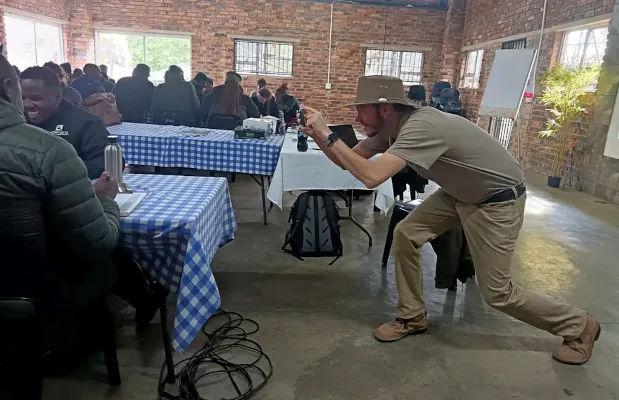
    A “Ryne Ferguson” spotted in the wild
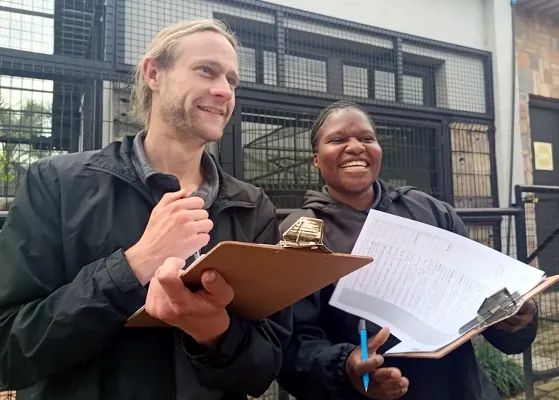
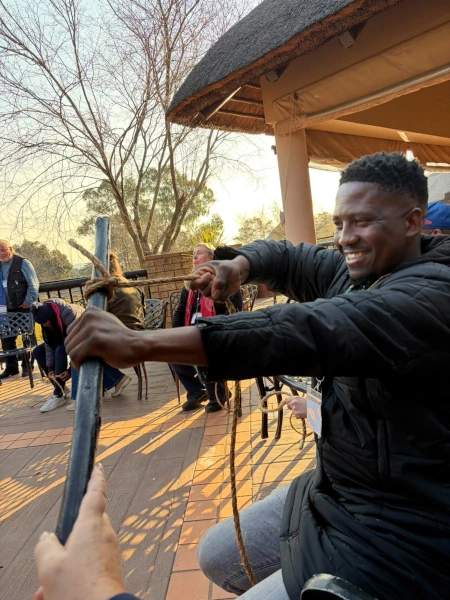
    Jordan and Faith learning to use an Ethogram
  • SAAMBR Team Visit to Lory Park Zoo

    SAAMBR Team Visit to Lory Park Zoo

    Visits to other facilities such as yours are a great way to further our experience in the field of animal welfare and conservation

    By Hayley Kim Tennant

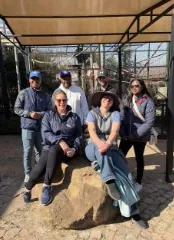
    On behalf of SAAMBR I would like to sincerely thank the team at Lory Park for once again welcoming our team to the zoo on 25 July 2026. Tim, Summer, Lindo, Themba, and I enjoyed our visit so much.

    Visits to other facilities such as yours are a great way to further our experience in the field of animal welfare and conservation education and to collaborate and chat with other keepers.

    We understand that this took time and effort away from your already very busy zoo lives, especially on a weekend day. Each experience during that morning was special from Robynn and her feathery friends
    welcome in the car park to meeting the cockatoos and owls and reptiles up close. It was also lovely to chat with Kara. We were especially fortunate to witness the Loop Abroad veterinary students putting a few enrichment projects into action with the primates. This is an innovative way to bring extra volunteer and financial support into the zoo to serve animal welfare. Loved seeing the primates engaging with the devices. Projects like these initiate behaviour that brings an exhibit alive. I have always been impressed by the complexity of the Lory exhibits and the behavioural opportunities that they afford the animals.

    The Lory Team have always welcomed us on visits and graciously hosted workshops, which is appreciated. You are an integral part of the zoo community that has championed and fostered the learning of animal guardians through the years.

    We are so glad that we could visit and share this experience with new members of our team, and we hope you and your team visit us at SAAMBR someday soon to reciprocate the exchange. We wish your
    team and all your beasts well. May Lory Park Zoo continue to be a place where families and students gather to appreciate wildlife and learn.

    Hayley Kim Tennant
    Lead Animal Care Specialist
    Mammals and Birds

  • A New Chapter for Conservation Education at Munda Wanga

    A New Chapter for Conservation Education at Munda Wanga

    My name is Zifa Nkhoma, Education Director Earth FX international Zambia; I have successfully established the program at Munda Wanga Wildlife park together with my team.

    By Zifa Nkhoma

    Earth FX International Zambia is a non-profit organization on a simple, urgent mission: Saving wildlife, protecting the environment, and uplifting human health and well-being internationally.

    My name is Zifa Nkhoma, Education Director Earth FX international Zambia; I have successfully established the program at Munda Wanga Wildlife park together with my team.

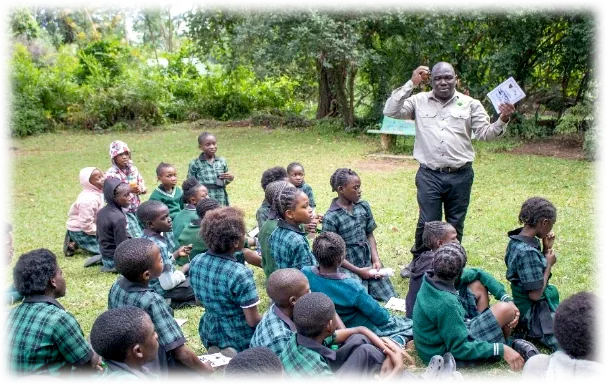
    Since launching in April 2026, it has made a powerful start, welcoming school groups from across Lusaka and beyond, with 300 learners already participating in just the first few months.

    We believe lasting conservation starts with understanding. That is why we are pleased to share a major milestone in our work at Munda Wanga Wildlife Park in Lusaka — the launch of a transformative Conservation Education Program

    The response from schools, teachers, and learners has been incredibly encouraging. It affirms what we have long known: Zambia’s young people are hungry for immersive, practical conservation education that connects them directly to wildlife.

    Why It Matters: Our Impact on Wildlife

    Munda Wanga is more than a park — it is a sanctuary for rescued and endangered wildlife, and a living classroom. Every education session we deliver creates a ripple effect for conservation:

    • From Apathy to Advocacy: By connecting children directly with wildlife, we are replacing apathy with empathy. A child who understands a velvet monkey’s story is far less likely to support illegal wildlife trade and far more likely to protect its habitat.
    • Building Zambia’s Next Generation of Stewards: We are not just teaching facts; we are cultivating future keepers, veterinarians, ecologists, and community leaders who see wildlife as part of Zambia’s heritage and future.
    • Healthier Ecosystems, Healthier People: True to our mission, we teach conservation as part of a bigger system — linking wildlife health, habitat health, community livelihoods, tourism, and human well-being. When ecosystems thrive, communities thrive.

    A Progressive Curriculum That Grows with The Learner

    At the heart of the program is a new five-stage curriculum, thoughtfully designed to grow with learners from early primary through to secondary school. Each stage builds knowledge, empathy, and action.

    1. Junior Conservation Explorers | Grades 1–3
      Discover • Wonder • Care • Do
      For our youngest learners, we focus on discovery and wonder. Through hands-on activities exploring wildlife, habitats, senses, and simple ecosystems, children learn to notice the natural world around them, ask questions, and develop care for all living things.
    2. Wildlife & Habitats | Grades 4–6
      An ecology-focused program where students learn the fundamentals of ecology and explore the vital interconnectedness of habitats and species. It lays the scientific foundation for understanding why protecting a habitat saves everything within it.
    3. Be a Keeper | Grades 7–9
      Think • Investigate • Understand • Act
      This behind-the-scenes program invites learners to investigate ecosystems, wildlife adaptation, and biodiversity alongside our keepers. Rather than simply providing answers, we guide students to understand what it truly takes to be a keeper.
    4. Conservation Change makers | Grades 7–9
      Understand • Question • Collaborate • Design • Lead
      For older learners, conservation is explored as part of a bigger system — linking wildlife, communities, tourism, biodiversity, and a changing climate. Students are challenged to consider different perspectives and to design sustainable solutions, moving from understanding change to leading it.
    5. Food & Nutrition – Keepers of the Day | Grades 8–12
      A practical module focused on animal nutrition and welfare. Students learn the principles of animal nutrition and work hands-on to prepare food and provide improved nutrition for animals in the park — directly contributing to the well-being of the wildlife in our care.
  • Improving Of Daily Care For Animals

    Improving Of Daily Care For Animals

    Attending the recent Advanced Animal Behavioural Management Workshop hosted at the Johannesburg Zoo was a very good experience for my career as an animal keeper and as a SAAKA member.

    By Khomotso Madisha

    Attending the recent Advanced Animal Behavioural Management Workshop hosted at the Johannesburg Zoo was a very good experience for my career as an animal keeper and as a SAAKA member.

    The workshop was facilitated by Johannesburg Zoo and Wild Welfare, the 5 day work gathered zoological professionals from across South Africa to help us improve the well-being and welfare of animals in our care.The workshop combined animal behavioural science and hands on practical work. For me, the experience provided critical tools that will directly improve my day-to-day husbandry routines.

    Key Learnings and Workshop Highlights: I have learned the importance of animal choice, control, and emotional wellbeing and monitoring of animal behaviours.

     The core modules focused on:

    • Operant Conditioning: Mastering the precise timing needed to shape voluntary husbandry behaviours.
    • Positive Reinforcement Training (PRT): Practicing force-free target training across various species to make veterinary checkups entirely stress free.
    • Enrichment Planning: Shifting away from random enrichment items toward goal-oriented plans that trigger specific, natural wild instincts.

    How this training will enhance my routines:

    Returning to my daily setups, the impact of this training will show up immediately in how I manage my assigned habitats.

    First, I am completely upgrading how I approach training logs. By utilising the objective behavioural tracking methods taught by the Wild Welfare team, I can keep training progression consistent across all keeper shifts, eliminating guesswork.

    The hands-on target training for tigers gave me a better understanding of patience, bridging during training and importance of timing of reinforcement during training which will help me improve. 

    I have been collaborating with passionate peers at the Johannesburg Zoo which gave me sense and need for keeper exchange and for collaboration with keepers from other facilities.

    Thank you Johannesburg Zoo for the love and keeping us safe.

  • Giraffe Training and Enrichment

    Giraffe Training and Enrichment

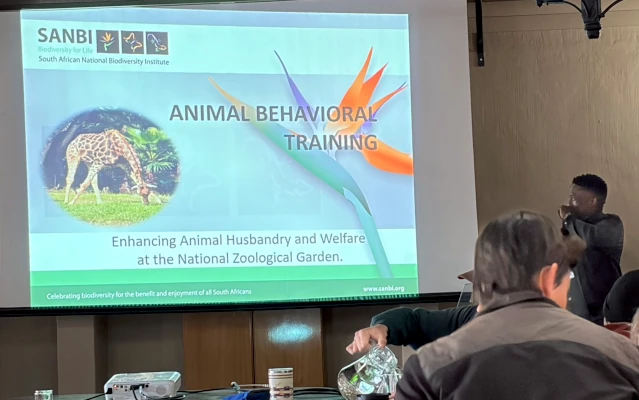
    Enhancing Animal Husbandry and Welfare at the National Zoological Garden. By Khomotso Madisha My name is Khomotso, an animal keeper based at SANBI/National Zoological Garden of SA. My daily responsibilities include daily care and management of Giraffes which are animals that I have developed so much love for because I work closely with them on…

    Enhancing Animal Husbandry and Welfare at the National Zoological Garden.

    By Khomotso Madisha

    My name is Khomotso, an animal keeper based at SANBI/National Zoological Garden of SA. My daily responsibilities include daily care and management of Giraffes which are animals that I have developed so much love for because I work closely with them on daily basis. My work is beyond just cleaning and feeding but it includes ensuring that their needs are met through nutrition and enrichment activities although enrichment expand to all animals we have at NZG but this large herbivores are my priority on a daily basis.

    Background

    The National Zoological Garden has 4 Giraffes, namely: 

    • Momoza 12 years old
    • Bonito 8 years old( Breeding bull)
    • Azuri 4 year old male
    • Luna who is 1 year 2 months(Female), Momoza is Mother to Azuri and Luna. 

    I have recently started behavioural training for Giraffes which was inspired by the Animal Welfare Workshop at Johannesburg Zoo in October 2025. The behavioural management activities include: Hand feed, targeting, public engagement, voluntary participation, stationing, behaviour observation and record keeping.

    Giraffes have fear especially to people who don’t work closely with them and that lead to aggression and they tend to run as people approach them which can results in injuries from both animals and keepers.

    I use hand feed as a tool to help overcome their fear by bringing visitors closer to them,although visitors are no longer able to do hand feed due to foot and mouth precautions but we can bring animals closer to them as they stand outside of the enclosure as they eat their favourite leaves from hand feed.

    Giraffes eat a variety of trees of which celtis and mulberry are their most favourite which I use as a reward for reinforcement.

    This process of hand feed have seen Giraffes getting more comfortable and less fear which increases safety and create more connection and trust between animal and keeper.

    Behavioural Training

    Animals are trained to enter the night-room and crush voluntary. Different feeding styles are provided to encourage them to move around the enclosure which promote foraging instinct and give them a choice and control in their own environment and keep them occupied. Scatter feeding feeding helps stretch and manipulate their long tongues to wrap around and pull small pieces of browse, leaves and cubes inside the PVC pipes as part of enrichment.

    Reason for Training

    I have introduced this training so that it can help them overcome fear, increase safety for keepers as they feed, and encourage full body observation and ability to touch them without fear. This will in the future allow us to do blood draws with the veterinary team, X Ray, body weight, safe movement during relocation if need be and possibility of doing hoof trimming.

    Tools

    I use browse for hand feed as a strategy to get closer to them and do body observation which build trust as well. Since they are afraid of new objects, I attach browse on a target stick and encourage them to eat from different sides which make them move around and promote stationing. 

    Documentation

    I have created a training plan and SOP which await approval, they guide me on the procedures I need to follow during training and for safety considerations during training. The training guide me to the steps to follow in order to get required behaviours for which everything has to be recorded on a checklist to monitor observed behaviours during daily training for further adjustments and progress tracking. 

    Conclusion

    Behavioural training increase safety and creates trust and connection between keepers and animals. Animals always respond to how we make them feel,it is important to pay attention on their emotions and behaviours through observation and training participation because our endless efforts create a long lasting impact on the lives and behaviours of animals.

  • Unforgettable Tour From SAAMBR Team to The National Zoological Garden

    Unforgettable Tour From SAAMBR Team to The National Zoological Garden

    We had an exciting visit from our colleagues from the South African Association for Marine Biological Research on Sunday, 26 July 2026.

    By Khomotso Madisha

    We had an exciting visit from our colleagues from the South African Association for Marine Biological Research on Sunday, 26 July 2026.

    The visit saw us giving our colleagues a tour of the zoo,sharing our daily care responsibilities on animal welfare practices, explore daily management set-ups, exchange knowledge of animal training 

    I got guidance on the behavioural training I am busy with for giraffes especially on key areas for improvements which will be useful for the process of training. Tour saw SAAMBR getting knowledge exchange from NZG sections including: Animal Kitchen, Animal hospital, Seals feed, Vulture feed,  Giraffe interaction, Aquarium, Reptile, Education department and overall zoo tour.

    Hosting SAAMBR team was a great experience for me and my colleagues as we enjoyed the knowledge exchange for which I am confident that I will visit them in their facility as well to learn about their daily routines and animal husbandry methods. 

  • Creature Feature: The Nile Crocodile

    Creature Feature: The Nile Crocodile

    Few animals command the same mixture of respect, fear and fascination as the Nile crocodile (Crocodylus niloticus).

    By Chris Cooke (Hoedspruit Reptile Centre)

    Few animals command the same mixture of respect, fear and fascination as the Nile crocodile (Crocodylus niloticus). This formidable reptile occurs across much of sub-Saharan Africa and, in South Africa, is associated mainly with the warm rivers, lakes, dams and estuaries of KwaZulu-Natal, Mpumalanga and Limpopo.

    Adult Nile crocodiles have broad, heavily armoured bodies, powerful tails and long jaws lined with conical teeth. Their rough, olive-brown skin provides excellent camouflage, while rows of raised bony scutes offer armoured protection. Males grow considerably larger than females, and exceptional individuals may exceed five metres in length. Their eyes, ears and nostrils are positioned on top of the head, allowing almost the entire body to remain concealed beneath the water. Despite their bulky form, crocodiles move with surprising speed over short distances on land and are exceptionally agile in their aquatic environment.

    Nile crocodiles are opportunistic generalist predators. Hatchlings feed mainly on arthropods, amphibians and small fish, while larger animals take bigger fish, birds, reptiles and mammals. Adults may ambush a variety of antelope and other animals drinking at the water’s edge, but they also scavenge carrion and help remove dead animals from aquatic systems. Their powerful jaws grip prey, while the muscular tail provides the explosive acceleration through the water to set the ambush.

    Breeding occurs seasonally. A female excavates a nest chamber in sandy banks above the waterline and may lay several dozen hard-shelled eggs. She guards the nest throughout incubation and responds to the calls of hatchlings when they are ready to emerge. The mother gently carries the young to water in her mouth and remains close to them during their vulnerable early lives. The temperature of the nest influences the sex of the developing embryos, not their chromosomes, making suitable nesting sites especially important.

    The Nile crocodile possesses several remarkable adaptations. A transparent third eyelid protects the eye underwater, while a muscular palatal valve, the gular flap, closes the throat when the mouth is open beneath the surface. Crocodiles can remain submerged for extended periods by slowing their heart rate and redirecting blood flow. Sensitive pressure receptors around the jaws called Integumentary Sensory Organs, detect tiny movements and other valuable information in the water, enabling accurate hunting even in poor visibility.

    Although the species is globally widespread, South Africa’s Nile crocodile population is regionally classified as Vulnerable. Major threats include the loss and degradation of wetlands and river systems, dam construction, pollution and declining fish stocks. Crocodile fat is also collected for the muti market trade. In recent years, the long term accumulation of lead in important water bodies has caused deaths and disabilities in specific costal populations and a mass die-off event has also been reported in the Kruger National Park.

    People remain one of the species’ most serious threats. Crocodiles are sometimes deliberately killed because they are feared, blamed for livestock losses or considered dangerous after attacks on people. Others are persecuted for meat, skins or traditional medicine. Protecting crocodiles therefore requires healthy river systems, effective law enforcement and practical education that helps communities reduce conflict. As apex predators and scavengers, Nile crocodiles remain vital participants in the functioning of aquatic ecosystems that support extraordinary biological diversity.

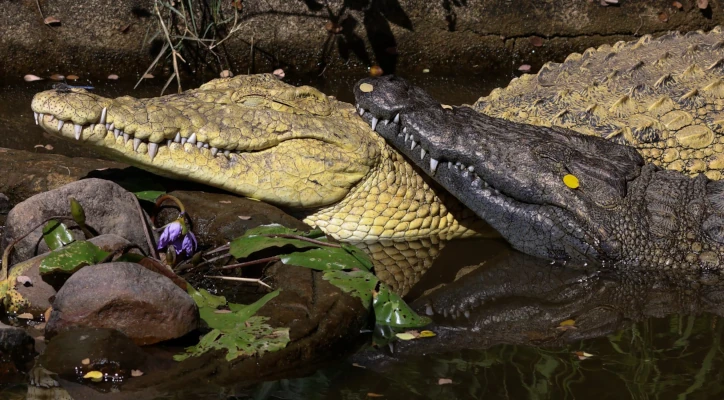
    At Hoedspruit Reptile Centre, we have two Nile crocodiles that are approximately 20 years old. Albie, has a genetic abnormality called amelanism, partial lack of melanin pigments. This is what gives Albie his yellow appearance, and is different from true albinism in that he does not have the characteristic “red eyes”.

    Albie arrived at HRC as a yearling, in a cardboard box which had been dumped at the Centre reception, after appearing briefly in a movie- or so the story goes. None of our team that are currently working at the centre were around back then and so we are unable to verify this. Albie is super smart, and very cunning. Our other beloved Nile croc is Odile. She is the more shy of the two. She has a lovely personality and is super sweet, most of the time. She can also be super stubborn ,and will not leave her pond for cleaning unless it is convenient for her. She came to HRC from a crocodile farm in 2021, and we are proud to say she won’t become a handbag, a belt, or a burger any longer.

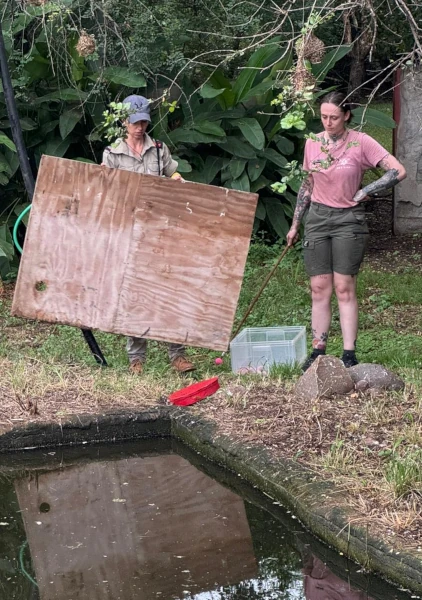
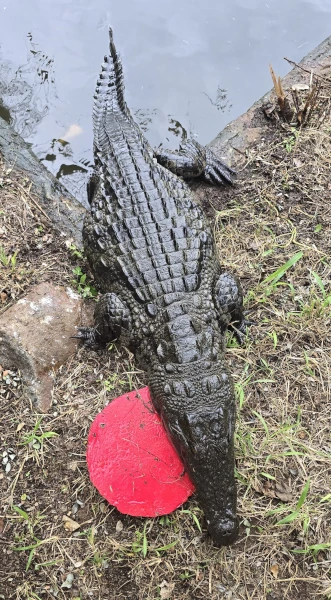
    We have recently started the process of training our crocodiles at HRC. The purpose of this is to provide environmental, physical and mental stimulation as well as to conditional the crocodiles to be more “keeper friendly”. Captive crocodiles can easily learn feeding behaviour and become very food motivated. They can recognise keeper uniforms and voices, as well as objects like brooms, food buckets, and feeding tongs. A bad situation to be in, is to be charged by a highly food driven crocodile that may accidentally mistake a keeper for it it’s meal. One of the co-objectives of training the crocodiles is to manage this high food motivated behaviour. The focus of our efforts will be to encourage our scaly friends to calmly approach keepers when individually called, to stop in front of them and to patiently wait for their meal reward. No rushing, no excited behaviours.

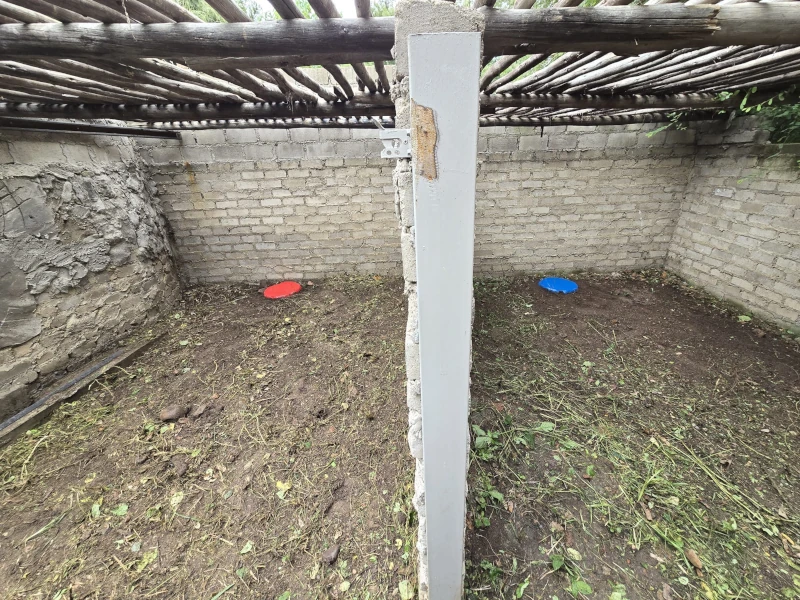
    In additional to training we have made another important safety modification- the creation of a lockable night room. Whilst in most instances it’s perfectly okay to conduct enclosure maintenance with a crocodile still in its habitat, one very real critical risk exists. If you accidentally fall into the pond, chances are you won’t get out before the crocs get in.

    To eliminate this, our crocs are trained to move into their night rooms on command and to station onto a target (a colourful concrete block). The night room doors are then closed and locked, allowing keepers to freely move around the enclosure and go about their business.

    Its easy to fall into the trap of thinking crocs are prehistoric mindless predators, especially because most of us find it hard to understand their behaviour cues. They simply don’t have the emotive facial expressions we are so used to reading that one sees in mammals and birds. Crocodiles are highly intelligent, adaptable and patient and for crocodiles in captivity to be truly happy , they need regular enrichment. Challenge yourselves and your animals and do share your experiences.