The International Congress of Zookeepers (ICZ) is launching a Video Competition
Show the world what it means to be a zookeeper
The International Congress of Zookeepers (ICZ) is launching a Video Competition, and we want you to be part of it. Grab your camera and capture the incredible diversity of work that zookeepers do every single day: from caring for animals to educating visitors. Your clip could reach zookeepers around the world.
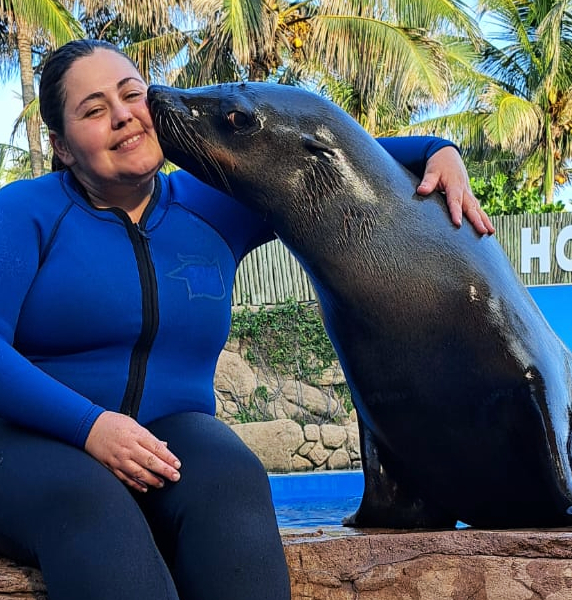
Today, Shine Cornelius, shares her journey on the stories blog. Take it away Shine!
Today, Shiné Cornelius, shares her journey on the stories blog. Take it away Shiné!
If someone had asked me years ago where I would find my greatest purpose, I never would have imagined that it would be standing beside some of the world’s most incredible animals. Looking back now, I realize that every step of my journey has been guided by one constant—my passion for understanding animals and helping them live the very best lives possible.
Animals have never simply been something I worked with; they have become my greatest teachers. Every species I have encountered has challenged me to think differently, communicate more effectively, and appreciate the incredible diversity of life.
My career has given me opportunities that many people only dream of. I have worked with dolphins, African penguins, macaws, cockatoos, and Cape fur seals, each species leaving a lasting impression on me. Every one of them has taught me something unique about behaviour, intelligence, trust, and the importance of building relationships.
Working with dolphins introduced me to the incredible power of communication. They reminded me that effective training isn’t about control—it’s about cooperation. They taught me patience, precision, consistency, and the value of positive reinforcement. Every successful behaviour began with trust, and every training session reinforced the importance of listening just as much as teaching.
African penguins showed me that even the smallest victories matter. Caring for them required attention to detail, observation, and understanding individual personalities. Watching them thrive through dedicated husbandry reinforced how meaningful everyday care can be in improving animal welfare.
Macaws and cockatoos brought colour, personality, and endless challenges into my life. Their intelligence continually amazed me. They reminded me that enrichment is never just about providing toys—it’s about providing opportunities for animals to make choices, solve problems, and engage with their environment. Their curiosity pushed me to become more creative and to constantly ask, “How can we make today more interesting?”
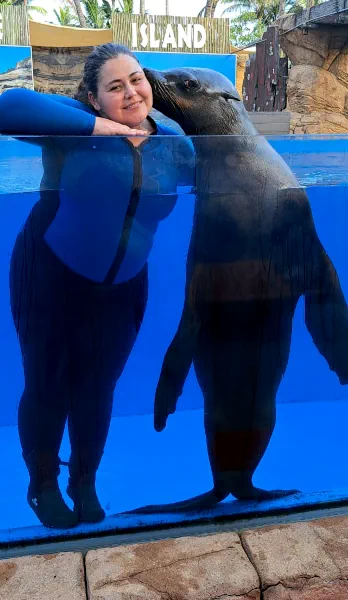
Today, much of my passion lies with Cape fur seals. Working alongside these remarkable marine mammals has deepened my appreciation for behavioural science and welfare-focused management. Every day presents something different. No two animals respond exactly the same, and that diversity keeps me learning.
One of the projects I am particularly proud of has been helping develop underwater foraging enrichment opportunities. Through welfare assessments, our team identified a gap in encouraging natural feeding behaviours at depth. Rather than accepting traditional feeding methods, we explored ways to better reflect the animals’ natural ecology.
The results were incredibly rewarding. We observed increased feeding at depth, more varied swimming patterns, healthy competition between animals, and even positive changes in social interactions. Watching behavioural science translate into improved welfare has been one of the most fulfilling experiences of my career. Moments like these remind me why evidence-based animal care is so important.
Throughout my journey, positive reinforcement has become much more than a training technique—it has become a philosophy. Whether working with animals or people, I have learned that reinforcing success builds confidence, trust, and stronger relationships. The best learning happens when individuals feel safe, motivated, and empowered to succeed.
Of course, working with animals has also taught me humility. Not every training session goes according to plan. Not every enrichment device works the first time. Sometimes progress is slow, and sometimes animals remind us that they always have a choice. Those moments have taught me resilience, flexibility, and the importance of adapting rather than forcing an outcome.
Perhaps one of the greatest lessons animals have taught me is the importance of observation. Animals communicate constantly, but rarely with words. Learning to recognise subtle behavioural changes has become one of the most valuable skills I possess. Good animal care begins with listening, watching, and understanding before taking action.
Another lesson I have learnt is that collaboration makes us stronger. Behind every successful welfare programme is a dedicated team of keepers, veterinarians, trainers, researchers, husbandry staff and volunteers working together toward a common goal. Some of my greatest achievements have been team achievements, and I value the opportunity to learn from the knowledge and experiences of others.
Outside of daily husbandry and training, I am passionate about continuing to learn. Animal care is constantly evolving as new research expands our understanding of behaviour, cognition, and welfare. I believe we should never stop asking questions or seeking better ways to care for the animals entrusted to us.
This passion for learning is one of the reasons I am excited to be part of SAAKA. For me, SAAKA represents far more than membership in a professional association. It is a community of people who share the same commitment to advancing animal welfare, improving professional standards, and supporting one another.
I hope to gain new knowledge from experienced animal care professionals working with a wide variety of species and facilities. I look forward to learning different training techniques, enrichment ideas, welfare assessment methods, and husbandry practices that I can bring back to my own workplace.
Equally importantly, I hope to contribute my own experiences. Sharing the successes and challenges of implementing welfare assessments and underwater enrichment for Cape fur seals may inspire conversations that benefit animals beyond my own collection. I believe that when animal professionals openly share ideas, everyone grows—and, most importantly, the animals benefit.
Networking with passionate professionals is another opportunity I value. Every conversation has the potential to introduce a new perspective or solution that can improve the way we care for animals. Some of the best ideas often come from simply discussing challenges with people who understand the unique responsibilities of working in animal care.
Looking ahead, my goal is to continue growing as an animal care professional while helping promote evidence-based welfare practices. I want to contribute to a future where animal training is centred on trust, enrichment is purposeful, and welfare assessments become an essential part of everyday husbandry rather than an occasional exercise.
When I reflect on my journey so far, I don’t simply think about the animals I have worked with. I think about everything they have taught me. They have taught me patience, resilience, empathy, observation, adaptability, and the importance of lifelong learning.
Most importantly, they have taught me that caring for animals is not just a career—it is a responsibility and a privilege.
Every day I am reminded why I chose this path, and every new animal, every new challenge, and every new opportunity strengthens my passion even further. As I continue this journey with SAAKA, I hope to keep learning, keep sharing, and keep striving to improve the lives of the animals entrusted to our care. After all, they have given me so much, and the least I can do is spend my career giving my very best back to them.
His story is one of volunteering and an active interest in how things work. From the kitchens where food is prepared for all kinds of animals, to the animals themselves.
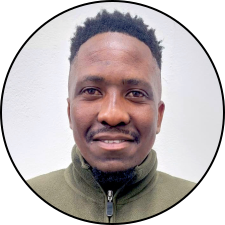
Khomotso comes from Limpopo, where he went on internship to study tourism. Then he got an opportunity to go to the NZG, where he worked with customers.
His story is one of volunteering and an active interest in how things work. From the kitchens where food is prepared for all kinds of animals, to the animals themselves.
2026 is the year of the Fire Horse in the Chinese Zodiac and we are certainly out of the gate with a flying start. In the flurry of activity, we would like to remind you to be kind to yourself too in 2026 – and we with that, we invite you to take a moment…
Spring 2026: In our first edition, meet the Wild Welfare team, discover the story of Diego the Sun Bear, explore the realities of Exotic Animal Cafes, and learn how professional networks like SAAKA are supporting progressive animal management practices across zoos and aquariums…